An exam-preparation course may teach material, sell a voucher or do both. A Fintwist card payment would not turn any of those purchases into a passing result. Before enrolling, separate the cost of instruction from the cost and conditions of assessment. This prevents a familiar phrase such as “certification included” from doing more work than the written offer supports.
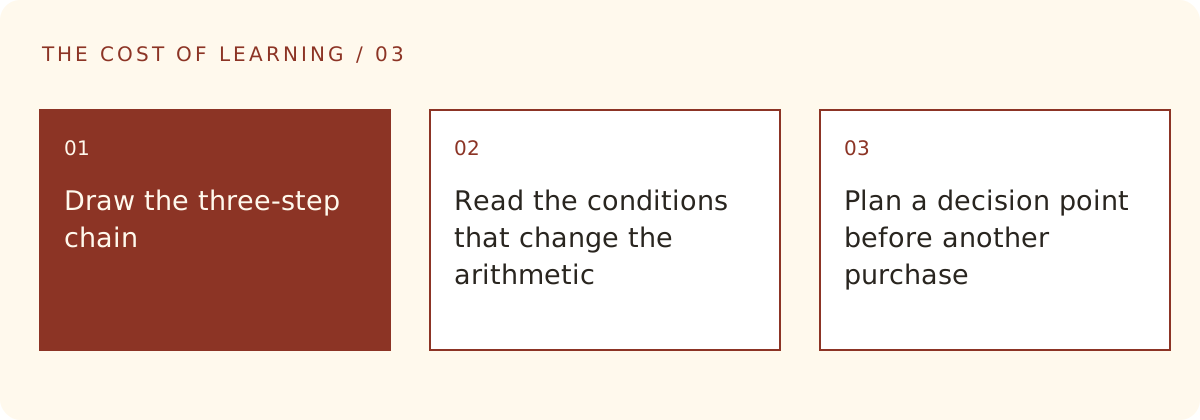
Draw the three-step chain
Preparation is the learning activity. Assessment is the test or evaluation. A credential is the recognition issued after the stated requirements are satisfied. Ask who provides each step. If different organizations are involved, check their terms independently rather than assuming the course seller controls the entire process.
In a fictional example, a $320 course includes one $90 exam voucher. A second attempt would cost another $90 under the imagined terms. The initial known purchase is $320, not $410. A possible second attempt belongs in a conditional scenario, not a claim that the learner will fail or a charge already owed.
Read the conditions that change the arithmetic
Check voucher expiration, scheduling restrictions, cancellation terms, identity requirements and whether a rescheduling charge can apply. Do not paste identity documents into an informal course-comparison sheet. The relevant assessment provider should explain its secure verification process.
“Unlimited access” to preparation lessons does not necessarily mean unlimited test attempts. A completion certificate does not necessarily satisfy a separate professional license or employer requirement. Ask the body that will accept the credential what it recognizes, rather than relying on a seller’s broad assurance.
Plan a decision point before another purchase
If a second attempt becomes relevant, pause and ask what information the first attempt produced. Is there a score report or feedback that identifies topics to practice? Would more preparation address the issue? A retake budget is permission to consider an option, not an obligation to spend it immediately.
Keep a clear note: instruction included, assessment included, possible extra charge, and unresolved requirement. This method does not estimate your chance of passing or advise on borrowing for education. It makes the purchase boundaries visible so that a course offer, an exam fee and a career outcome are not presented as the same thing.
Continue the comparison
Course access has a clock; practice needs a calendar
A refund window is a decision deadline, not insurance
Method and scope
This is an original worked planning guide. All amounts, schedules and providers in its examples are fictional unless a source is explicitly identified. The calculations explain relationships, not a personalized financial recommendation. No private account or provider payment flow was tested.