A course can be inexpensive and still be the wrong purchase. When considering an optional class, start with a task you want to perform afterward. “Learn spreadsheets” is hard to test. “Build a weekly hours sheet with formulas I can explain” gives the decision a useful boundary. The payment method does not establish course quality, employer recognition or suitability.
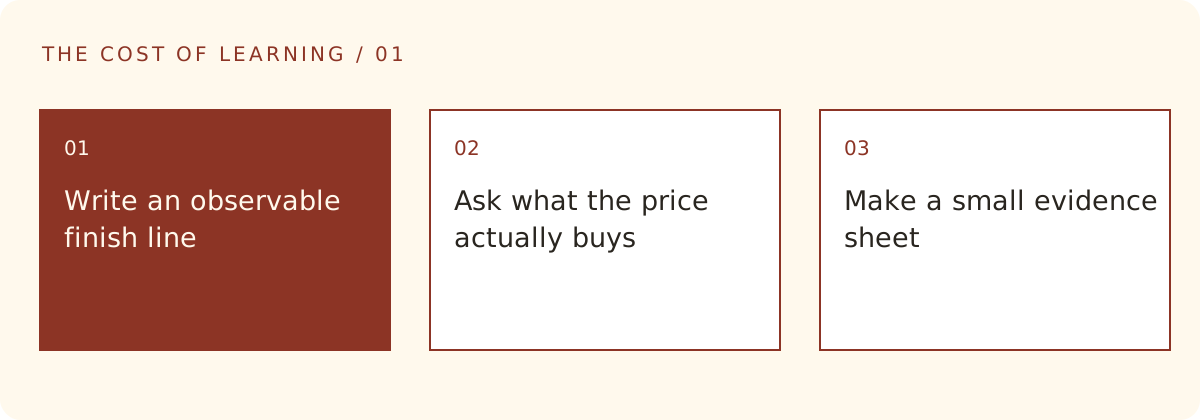
Write an observable finish line
Describe the task, the conditions and a reasonable way to check it. Do you need to complete the task independently, with a reference sheet, or under supervision? A beginner’s introduction and a job qualification are different goals. Do not let an attractive course title silently move the finish line from one to the other.
A fictional learner wants to format a one-page business letter. Course A includes guided practice and feedback on two letters. Course B lists twenty office topics but does not identify any reviewed work. That does not prove A is better overall. It identifies the evidence that matters for this particular goal: practice on the desired task and a way to find out what needs improvement.
Ask what the price actually buys
Request the syllabus, access period, teaching format, feedback arrangements and required equipment. Ask whether “support” means technical help, instructor feedback or a public discussion forum. A long video library can be valuable for one reader and unhelpful for another. Hours of content are not the same unit as hours of useful practice.
The FTC’s consumer guidance recommends investigating a training program before paying. That is a starting point, not an endorsement of any school. Our outcome statement is an original comparison method. It cannot establish accreditation or licensing eligibility, which require separate checks with the relevant body.
Make a small evidence sheet
Use three columns: intended task, evidence the course provides, and unanswered question. Keep marketing promises out of the evidence column unless the provider explains how they are delivered. A sample lesson can show teaching style, but cannot prove the full course has the same quality.
Finish with a decision you can revisit: proceed, request a specific answer, or keep looking. None requires sharing card details with an independent editorial site. Verify accepted payment methods and the actual terms directly with the school before purchase. A clear learning goal helps evaluate the offer; it does not guarantee a job, promotion or financial return.
Continue the comparison
The materials list belongs beside the tuition price
Course access has a clock; practice needs a calendar
Method and scope
This is an original worked planning guide. All amounts, schedules and providers in its examples are fictional unless a source is explicitly identified. The calculations explain relationships, not a personalized financial recommendation. No private account or provider payment flow was tested.