Employer training assistance is easier to evaluate when each cost has its own approval row. A worker paid through Fintwist should not infer benefit eligibility from the card brand. The employer’s actual policy determines what qualifies. Before enrollment, identify the course, the covered expense and the evidence needed to receive assistance.
Make the matrix specific to the course
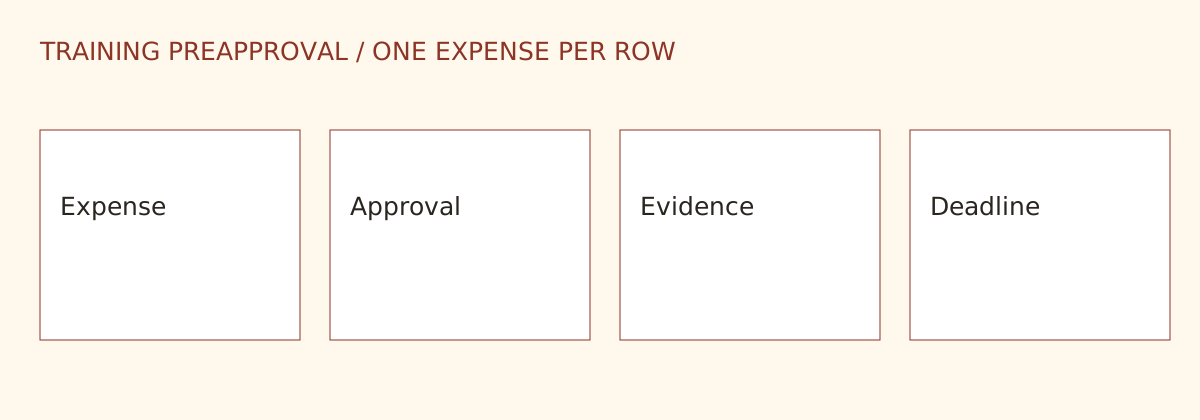
Use four columns: expense, approval status, completion evidence and submission deadline. Enter tuition, required books, exam charges and travel separately if they exist. A policy that covers tuition does not automatically cover the other categories. “Discussed with a supervisor” is different from approval by the person authorized under the policy.
| Fictional expense | Approval status | Evidence required | Deadline |
|---|---|---|---|
| Tuition $400 | Approved up to $300 in this invented example | Completion record and paid receipt | 30 days after completion in this example |
| Workbook $40 | Not yet confirmed | Ask before assuming coverage | Not confirmed |
| Exam $80 | Not included in the fictional approval | Separate approval would be needed | Not confirmed |
This is an invented policy for demonstrating the method, not an employer benefit or legal rule. The course has $520 in listed costs, but only a $300 tuition reimbursement has been approved under the example. The workbook and exam are not silently added to the approval. The actual purchase timing and any reimbursement timing remain separate questions.
Check conditions before the first commitment
Ask whether preapproval must occur before enrollment or payment, whether the provider or course must meet particular requirements, and whether the benefit has a period-specific cap. If another course already used part of that cap, identify the remaining amount rather than copying the headline maximum. Do not invent a balance from memory.
Check what happens if the course changes dates, the learner withdraws, a refund is issued or the completion requirement is not met. These are questions for the actual employer policy. This publication does not decide tax treatment, wage rights, benefit eligibility or whether a repayment condition is enforceable.
Prepare the evidence handoff
Obtain the exact name of the required completion record and the official submission route. A certificate of attendance might not satisfy a requirement to pass an exam. A course invoice and proof of payment can serve different purposes. Ask which documents are necessary, and send them only through the authorized employer process, not to this editorial site.
The finished output is a dated matrix with the approved amount, unresolved rows and next action. Mark a row complete only when the required evidence has been supplied and the outcome confirmed. If an important condition remains unclear, keep it visibly unresolved and decide whether to wait before enrolling. A clear record helps the learner avoid relying on a benefit that was never approved for the intended cost.
Continue the comparison
Verify who will recognize the credential before buying the course
The materials list belongs beside the tuition price
Method and scope
Original course-specific planning method. The example policy, amounts and deadline are fictional. No employer program, tax outcome or Fintwist account was tested.