A certificate can mean that a learner attended, completed assignments or passed a particular assessment. Those meanings are not interchangeable. If you are considering a course, evaluate the credential separately from whether you can pay for the course. Recognition depends on the organization that needs to accept it.
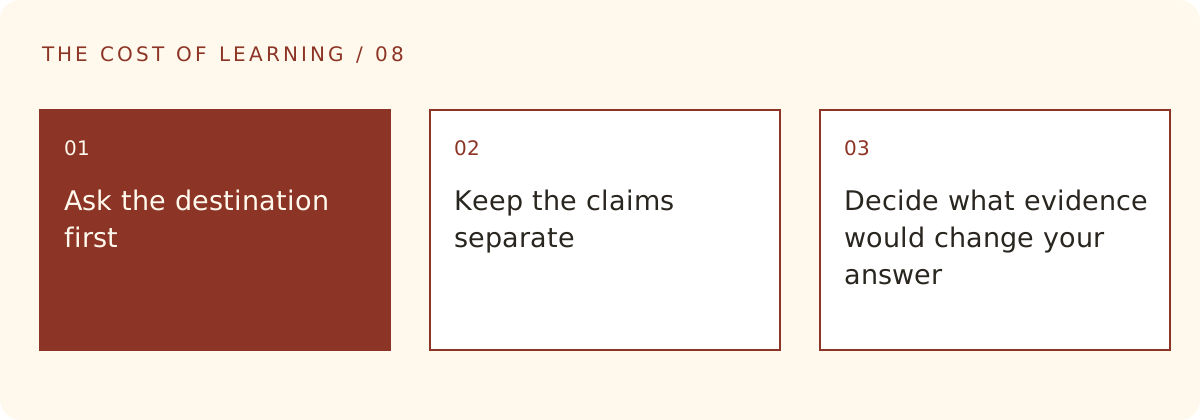
Ask the destination first
If the goal is an employer requirement, ask that employer what credential and issuer it accepts. If the goal concerns a regulated occupation, use the relevant official licensing authority. Do not infer eligibility from a course title, an impressive seal or a provider’s general statement that the program is “recognized.”
An invented learner needs a specific equipment-training record for a workplace. A general online safety certificate may cover related material without meeting that workplace requirement. The two can both have educational value, but they solve different tasks. Buying one does not establish that the other requirement has been satisfied.
Keep the claims separate
Accreditation, certification, licensing, course completion and continuing-education credit describe different relationships. Ask what exact claim is being made and who grants it. The FTC’s education guidance recommends checking a program carefully; it does not certify any offer linked from this publication.
Request a sample of the credential wording with personal details removed. Ask whether there is a verification process and whether renewal or additional assessments are required. Do not pay someone merely to “verify” a credential without first checking the actual issuing organization and the reason for the request.
Decide what evidence would change your answer
Write the intended use, the accepting organization and the confirmation still needed. An email from the appropriate official or an applicable published requirement can resolve a specific question. A testimonial from a past learner may describe an experience but cannot bind a different employer or licensing authority.
When recognition remains uncertain, keep it uncertain in the comparison. Do not convert “possibly useful” into “required” to justify the purchase. A course can still be worth taking for personal learning, but that is a different decision from buying a qualification. No article here guarantees employment, higher pay, credit transfer or licensing eligibility.
Continue the comparison
Buy a learning outcome, not a long topic list
An exam voucher and a passed exam are different purchases
Method and scope
This is an original worked planning guide. All amounts, schedules and providers in its examples are fictional unless a source is explicitly identified. The calculations explain relationships, not a personalized financial recommendation. No private account or provider payment flow was tested.